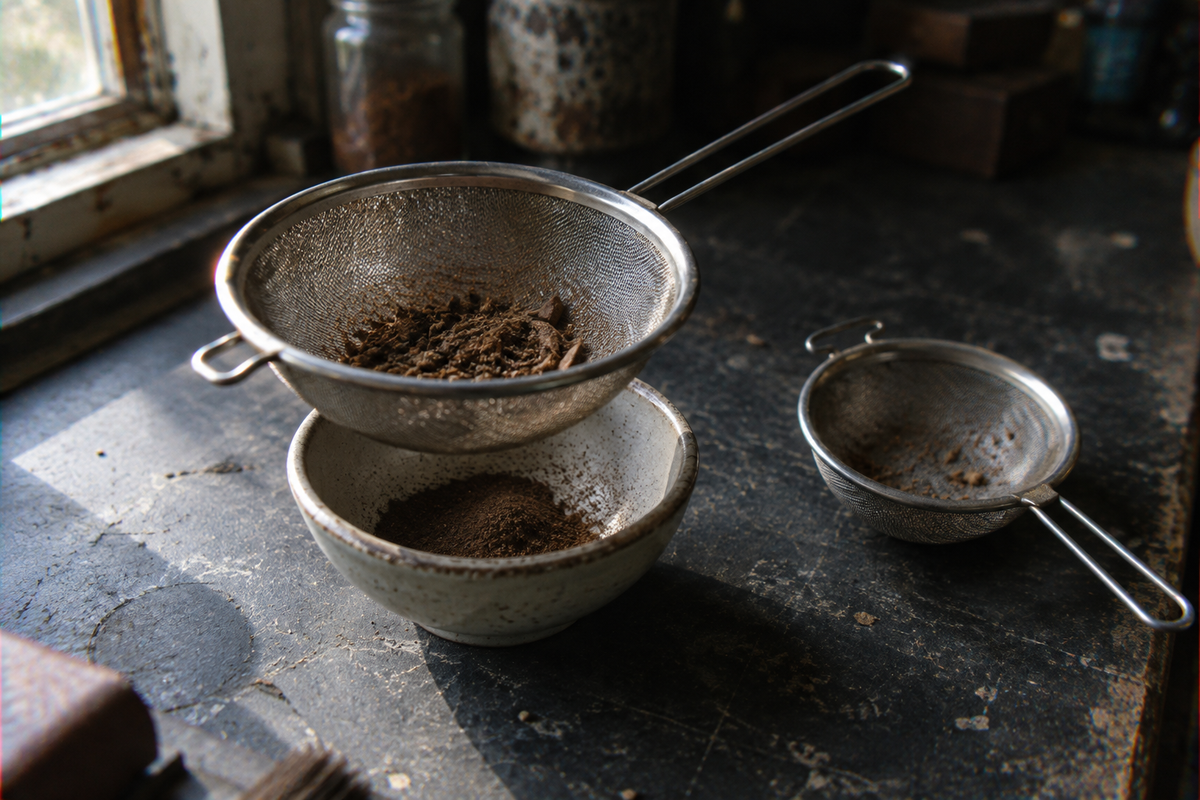
Sieves
For separating fine snuff from the coarse bits after grinding.

What to look for
Sieves are sold by mesh number or by micron size. Each recipe names the micron size it needs, so check that before you buy a sieve. An ordinary tea strainer gives a coarse snuff.
Small aquarium sieves sold for hatching brine shrimp (artemia sieves) are a low-cost alternative to lab sieves, and the listing gives the micron size. A tea ball works for coarse snuff too, and so does a pair of tights stretched over a jar of ground tobacco and shaken.
Tip the ground tobacco onto the mesh a spoonful at a time and tap the rim to move it through. Grind whatever stays on top again.
Used in 28 recipes
- Basic salt and soda snuff
- Bergamot snuff from cigarillos
- Best Parisian rappee
- Blending snuffs through a sieve
- Chocolate and hazelnut revival for a flat schmalzler
- Cigar snuff with Pusser's rum
- Coarse Samsoun snuff with salmiak
- Dry cigar snuff with wood ash
- Drying, grinding and sieving tobacco
- Fine, low-moisture snuff in the Santa Caterina style
- Four-leaf snuff fermented with toasted oak
- Homemade Firedance flake snuff
- Neffa-style snuff with wood ash
- Perique snuff from cigarettes
- Peterburg snuff (19th-century Warsaw)
- Plain home toast from burley leaf
- Plain snuff from rolling tobacco
- Reviving a dried-out rustica
- Rotterdam bergamot, clove and lemon snuff
- Rum and coffee snuff
- Simple salted leaf snuff
- Spearmint and menthol rustica
- Spray-on washing soda method
- Toasted Virginia gold snuff
- Tonka bean fermented snuff
- Watermelon sweet snuff
- Wine-cured Parisian rappee (a 19th-century recipe)
- Woodruff fermented burley snuff